
 386-758-3409
Purchasing a new property or investing in a newly drilled well is a major financial decision, and one of the most important factors to consider is the quality and safety of the water supply. While well water may appear clean and clear, appearances can be misleading.
Without proper testing, harmful contaminants can go undetected, posing serious health risks for homeowners and their families. That’s why professional well water testing is a crucial step when buying a property or installing a new well.
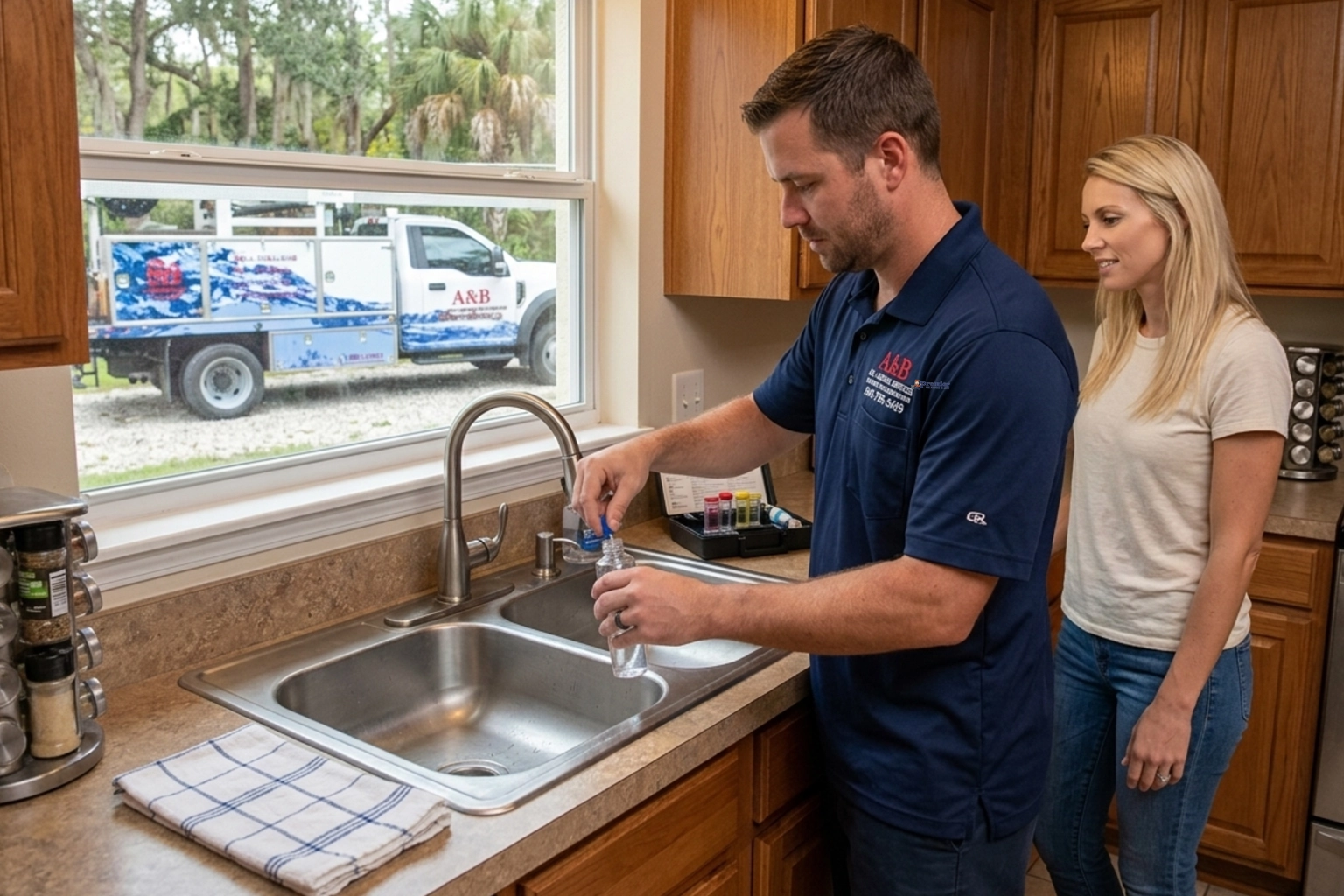
Why Well Water Testing Matters
Unlike municipal water systems, private wells are neither regulated nor routinely monitored by public agencies. The responsibility for ensuring water safety rests entirely with the property owner. Well water can become contaminated by naturally occurring minerals, bacteria, agricultural runoff, septic system leaks, or environmental pollutants.
Even if the water looks, smells, and tastes normal, contaminants may still be present. Some pollutants are invisible and odorless yet can pose long-term health risks. Testing helps identify potential issues before they become dangerous or costly to correct.
For buyers purchasing a home with a private well, water testing provides peace of mind and helps prevent unexpected problems after closing. It also gives homeowners valuable information about the well system’s condition and performance.
Common Contaminants Found in Well Water
Professional well water testing checks for a variety of contaminants that may affect health, plumbing systems, or water quality. Some of the most common include:
Bacteria and Microorganisms
Bacteria such as coliform and E. coli can enter groundwater through septic leaks, animal waste, or surface water contamination. These microorganisms may cause serious illness and should always be addressed immediately.
Nitrates and Chemicals
Agricultural fertilizers, pesticides, and industrial chemicals can seep into groundwater supplies. High nitrate levels are particularly dangerous for infants and young children.
Heavy Metals and Minerals
Naturally occurring minerals like iron, manganese, calcium, and sulfur are common in well water. While some primarily affect taste and staining, others—such as lead or arsenic—can pose major health risks.
Hard Water Issues
Excess minerals can create hard water, leading to buildup in pipes, reduced appliance efficiency, and increased maintenance costs. Testing helps determine whether water softening systems may be necessary.
Testing a Newly Drilled Well
A newly drilled well should always undergo comprehensive water testing before being used for drinking, cooking, or bathing. Although the well itself may be professionally installed, groundwater conditions vary greatly from one property to another.
Testing ensures the new well meets local safety standards and confirms the water is suitable for household use. In some cases, treatment systems may be recommended to improve water quality or remove contaminants before the well becomes fully operational.
Professional testing also establishes a baseline water quality report, which can be helpful for future maintenance and monitoring.
Protecting Your Investment and Your Health
Whether you are purchasing a property with an existing well or investing in a newly drilled system, professional well water testing is an essential step that should never be overlooked. Clean, safe water is one of the most valuable resources a property can have, and proper testing ensures you can use it with confidence for years to come.
Schedule an appointment with A&B Well Drilling & Pump Service. We make well water work for you!