
 386-758-3409
If you’re scheduling a new well for your Lake City, FL, property, you may wonder what exactly happens once the drilling equipment starts operating. From the surface, well drilling can look like a crew is simply creating a very deep hole. Underground, however, much more is happening.
Well drilling is a precise process that involves navigating different geological layers and identifying formations capable of supplying usable groundwater. Understanding what lies beneath your property can help you feel more comfortable with the process.
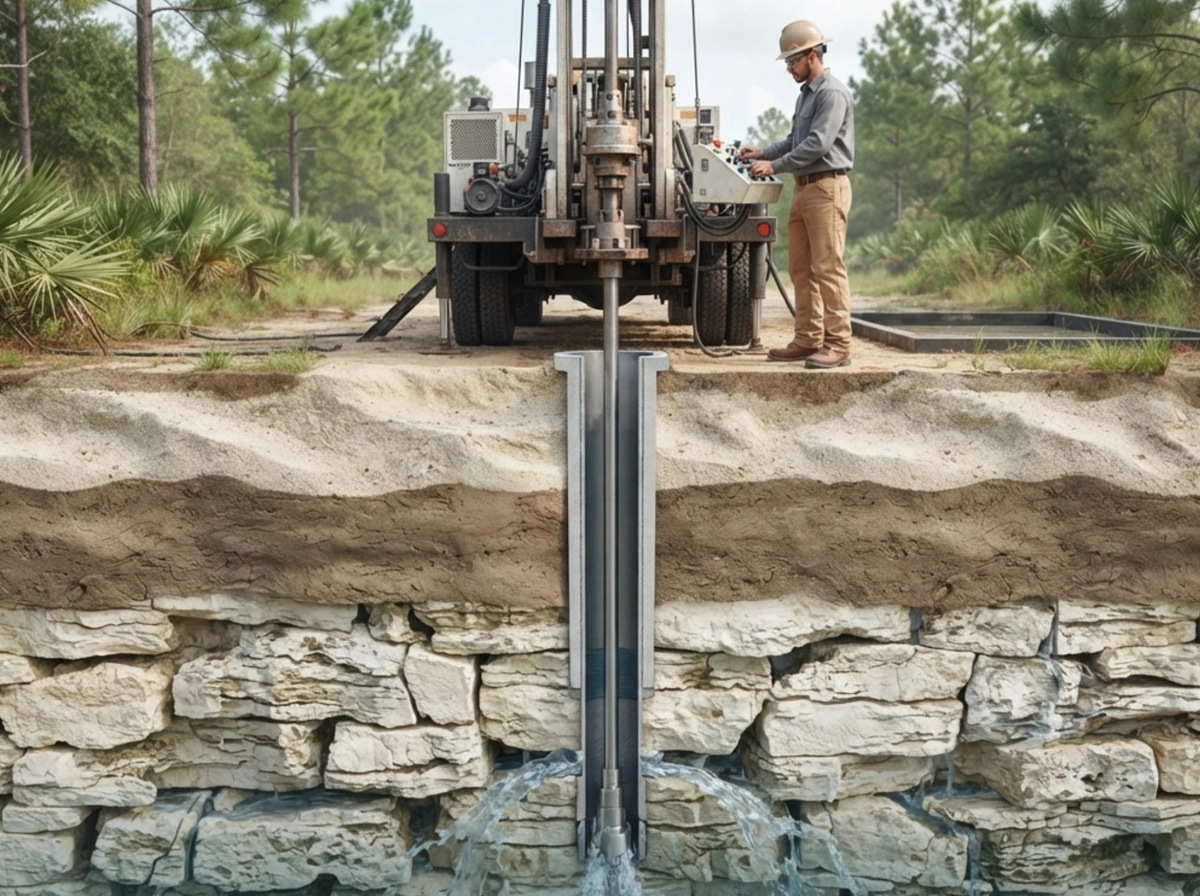
Florida’s Underground Geology
As a well is drilled, the equipment may encounter layers of sand, clay, limestone, and other materials. These formations can vary widely in thickness and depth, even between properties in the same general area.
Florida is particularly well known for its limestone geology. Limestone is important to groundwater because its cracks, pores, and openings allow water to collect and move underground.
The goal isn’t simply to drill as deeply as possible. A well driller needs to understand the formations encountered along the way and determine where suitable groundwater is located.
Drilling Through Different Layers
Specialized drilling equipment creates a borehole that extends downward through the earth. The drilling method and equipment used can depend on factors such as soil conditions, geology, and the intended depth of the well.
As drilling progresses, material from underground—often called drill cuttings—is brought toward the surface. These cuttings provide useful clues about what the drill is encountering.
A change from sand to clay or limestone, for example, can tell an experienced driller that the borehole has entered a different geological formation. By monitoring these changes throughout the process, the drilling team develops a better picture of what exists underground.
Finding Water-Bearing Zones
Finding groundwater involves more than reaching a predetermined depth.
Drillers pay attention to geological conditions and signs that indicate water-bearing formations. In limestone, for instance, fractures and openings may provide pathways for groundwater to flow. The drilling crew can evaluate conditions as the borehole advances to help determine whether a particular zone is likely to provide an adequate water supply.
Local experience is especially valuable. Familiarity with Lake City and the surrounding North Florida geology can help drilling professionals anticipate the formations they may encounter, though conditions can still vary from one property to another.
Protecting the Well
Reaching water is only part of building a well. Proper well construction is also important for helping protect the water supply.
Depending on the well design and site conditions, casing is installed to stabilize and protect portions of the borehole. The space around the casing may also be properly sealed to help prevent surface water and contaminants from traveling down the outside of the well.
Once construction is complete, the well may be developed and tested to evaluate its performance before being put into regular use.
Know What’s Happening Beneath Your Lake City Property
Well drilling isn’t simply digging until you hit water. It requires knowledge of local geology, specialized equipment, careful observation, and proper well-construction techniques.
If you’re curious, schedule an appointment with A&B Well Drilling & Pump Service. We make well water work for you!